
Salt Brine vs Rock Salt: The Costly Snow Removal Mistake Boston Area Property Managers Keep Making
Every winter in the Boston Area—especially here in Milton, Massachusetts—we get the same urgent calls.
A property manager relied heavily on rock salt. Temperatures dropped. Ice bonded. Sidewalks became skating rinks. Concrete started flaking. Landscaping turned brown. Tenants complained. Liability concerns skyrocketed.
And the common denominator?
A misunderstanding of salt brine vs rock salt and when to use each one strategically.
At Molloy Lawn & Landscape, we’ve managed snow and ice for years across the Boston Area. We’ve seen firsthand how choosing the wrong de-icing strategy can cost property managers thousands in repairs, over-application, and potential slip-and-fall claims.
Let’s break down the real difference between salt brine vs rock salt, why it matters in Milton’s freeze-thaw climate, and how to avoid one of the most expensive snow removal mistakes.
Understanding Salt Brine vs Rock Salt

Before we talk about mistakes, let’s define the two:
What Is Rock Salt?
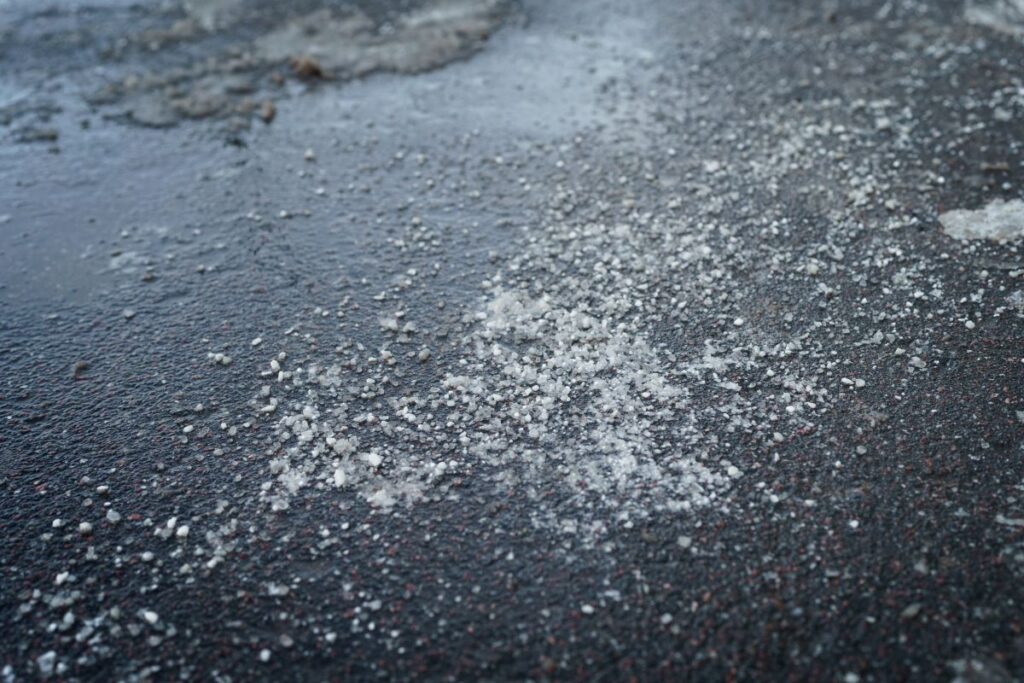
Rock salt (sodium chloride) is the traditional granular ice melt you see scattered across parking lots and sidewalks. It works by lowering the freezing point of water, helping melt ice.
It’s cheap.
It’s common.
It’s easy to spread.
But it’s often misused.
What Is Salt Brine?
Salt brine is a liquid solution of salt and water—typically 23% salt concentration—that is sprayed onto surfaces before or during winter weather events.
Instead of reacting after ice forms, salt brine works proactively by preventing ice from bonding to pavement.
And that distinction makes all the difference.
The Real Problem With Rock Salt in the Boston Area
When discussing salt brine vs rock salt, most property managers default to rock salt because it’s familiar and inexpensive per bag.
But here’s what we regularly see across Milton and the greater Boston Area:
1. Rock Salt Is Ineffective at Low Temperatures
Rock salt becomes far less effective once temperatures drop below 15°F.
In Massachusetts, we regularly see cold snaps well below that threshold. When that happens, rock salt just sits there—failing to melt ice while creating a false sense of security.
2. Ice Bonds Before You React
One of the biggest issues in the salt brine vs rock salt debate is timing.
Rock salt is typically applied after snow begins accumulating. By that point, ice has already bonded to concrete and asphalt.
That bond makes plowing harder.
It increases labor time.
It increases salt usage.
It increases surface damage.
3. Concrete and Asphalt Damage
Here in Milton, we deal with constant freeze-thaw cycles. Rock salt accelerates deterioration by:
-
Allowing water to penetrate concrete
-
Expanding during freezing
-
Causing cracks and spalling
-
Contributing to potholes in parking areas
Over time, that “cheap” salt becomes very expensive.
4. Landscaping and Environmental Damage
Rock salt runoff impacts:
-
Grass along sidewalks
-
Shrubs near parking lots
-
Tree root systems
-
Local soil quality
In the Boston Area, where environmental regulations are strict and sustainability matters, overusing rock salt creates both ecological and reputational problems.
5. Overuse Is Extremely Common
This is perhaps the biggest mistake in the salt brine vs rock salt comparison.
Because rock salt is granular and visible, crews tend to apply too much. More salt equals more cost—and more damage.
Why Salt Brine Is a Smarter Strategy
Now let’s talk about why salt brine often wins the salt brine vs rock salt conversation.
1. It Prevents Ice Bonding
Salt brine works as an anti-icing solution.
When applied before snowfall, it creates a protective layer that prevents ice from bonding to pavement.
That means:
-
Faster plowing
-
Less scraping
-
Less surface damage
-
Reduced salt usage
This is huge in Milton, where freeze-thaw conditions make bonding a recurring problem.
2. It Works at Lower Temperatures
Salt brine can remain effective down to approximately 0°F.
For Boston Area winters, that’s a major advantage over traditional rock salt.
3. It Reduces Total Salt Usage
When properly applied, salt brine can reduce overall salt usage by 30–50%.
Less salt means:
-
Lower material costs
-
Less runoff
-
Healthier landscaping
-
Reduced corrosion
In the long run, salt brine is often more cost-effective despite requiring specialized equipment.
4. Precision Application
Liquid brine is sprayed evenly and precisely.
Unlike rock salt, which can bounce or scatter during application, brine adheres directly to surfaces—meaning no wasted product.
In the salt brine vs rock salt comparison, precision is one of brine’s strongest advantages.
When to Use Salt Brine vs Rock Salt in Milton, MA
Here’s the strategic approach we recommend to property managers across the Boston Area.
✔ Pre-Treatment Before a Storm
Apply salt brine 12–24 hours before snowfall.
This prevents ice bonding and makes post-storm cleanup dramatically easier.
Pre-treatment is the number one way to reduce liability risks.
✔ Light Snow Events
For light snowfall or freezing drizzle, salt brine alone is often sufficient.
It controls ice effectively without overusing materials.
✔ Heavy Snow Events
For heavier storms, the most effective approach is a combination strategy:
-
Pre-treat with salt brine
-
Plow promptly
-
Apply minimal rock salt only where necessary
The key is understanding that salt brine vs rock salt is not about choosing one exclusively—it’s about using each strategically.
The Costly Mistake We See in Milton
Here’s what happens far too often:
A property manager skips pre-treatment.
Snow falls.
Ice bonds.
Rock salt is dumped heavily.
Temperatures drop below 15°F.
Ice remains.
More salt is applied.
Concrete begins deteriorating.
Tenants complain about slick areas.
Landscaping suffers.
That reactive approach costs far more than a proactive brine strategy.
In our experience serving the Boston Area, the biggest mistake isn’t choosing rock salt—it’s relying on it alone.
Why Local Expertise Matters in the Boston Area
Managing winter weather in Milton is not the same as managing it in other parts of the country.
We deal with:
-
Coastal moisture patterns
-
Nor’easters
-
Sudden temperature drops
-
Frequent freeze-thaw cycles
Understanding salt brine vs rock salt within the context of Boston’s climate is critical.
At Molloy Lawn & Landscape, we tailor snow and ice management strategies specifically to the conditions we see here—not generic national advice.
Liability and Safety: The Hidden Cost
Slip-and-fall incidents are one of the biggest liability risks for property managers.
When ice bonds to pavement and rock salt is applied too late, hazardous conditions remain.
A proactive brine strategy significantly reduces that risk by preventing bonding in the first place.
In the salt brine vs rock salt conversation, safety should always be the top priority.
Frequently Asked Questions About Salt Brine vs. Rock Salt
Is salt brine worth it for smaller Milton properties?
Yes. Even smaller commercial properties benefit from reduced salt usage, less surface damage, and improved safety.
Is salt brine safe for pets?
Salt brine typically uses less total salt than traditional over-application of rock salt. Communicating treatment schedules to tenants helps ensure safety for pets.
What’s the biggest snow removal mistake Boston property managers make?
Waiting until after the storm to act.
Pre-treatment is everything.
Pro Tip for Boston Area Property Managers
Pre-treat before the storm.
It’s simple.
It’s effective.
It saves money.
It reduces liability.
It protects your infrastructure.
When evaluating salt brine vs rock salt, remember that winter management is about strategy—not just material.
Protect Your Property This Winter
If you’re managing commercial or residential properties in Milton or the greater Boston Area, don’t make the costly mistake of relying solely on rock salt.
A strategic approach to salt brine vs rock salt can:
-
Reduce long-term surface damage
-
Lower material costs
-
Improve tenant safety
-
Protect landscaping
-
Minimize environmental impact
At Molloy Lawn & Landscape, we specialize in proactive snow and ice management tailored specifically to Massachusetts winters.
Contact us today for a consultation and let’s build a winter strategy that protects your property—and your bottom line.