
Is Ice Melt Safe for Lawns?
When winter weather hits, ice melt becomes part of everyday life. It keeps walkways safe, driveways usable, and entrances accessible. But many homeowners stop and ask the same question every year: Is Ice Melt Safe for Lawns?
It’s a smart question — and the honest answer is sometimes. Some ice melt products are far more damaging than people realize, while others can be used responsibly with minimal long-term impact. The difference often comes down to what you’re using, how much you apply, and where it ends up once the snow starts melting.
Understanding how ice melt works — and how it affects grass, soil, pets, and pavement — can help you protect your lawn now and avoid frustrating problems when spring arrives.
How Ice Melt Actually Works (Quick Science, No Headache)

Ice melt doesn’t magically dissolve ice. Instead, it lowers the freezing point of water through a chemical reaction. When ice melt contacts snow or ice, it creates a salty brine that prevents refreezing at normal freezing temperatures.
That same reaction that breaks down ice can also:
-
Pull moisture out of soil
-
Disrupt nutrient balance
-
Stress grass roots
-
Damage nearby plants
So when people ask, “Is Ice Melt Safe for Lawns?” the real answer depends on how that chemical reaction interacts with your turf and soil.
Why Ice Melt Can Damage Lawns in Winter
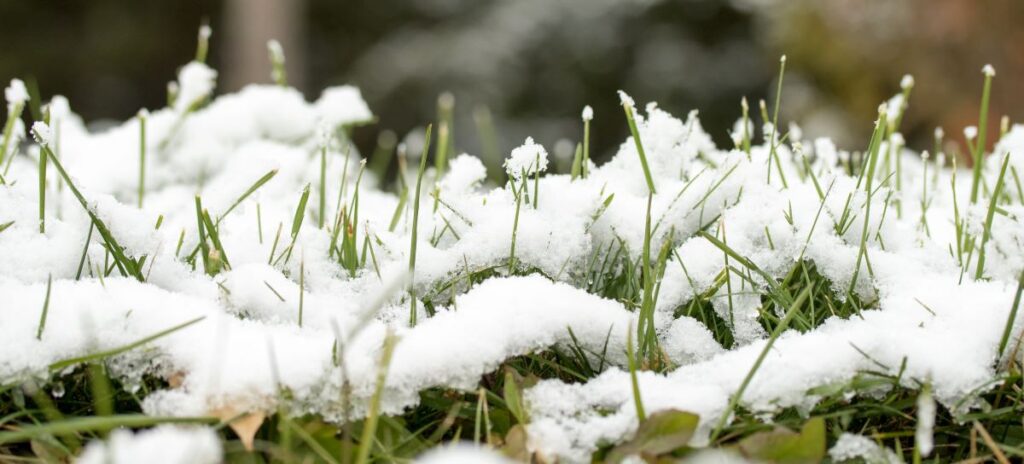
Lawn damage from ice melt usually doesn’t show up right away. In fact, most homeowners don’t connect winter ice melt use to spring lawn problems — but the link is strong.
As ice melt dissolves, it travels with melting snow into surrounding soil. High salt concentrations pull moisture away from grass roots, a process known as osmotic stress. Over time, this weakens turf and disrupts root function.
Common signs of ice melt damage include:
-
Burned or discolored grass along sidewalks and driveways
-
Thin or patchy turf in spring
-
Delayed green-up
-
Increased weeds in damaged areas
The damage builds slowly, which is why it often surprises homeowners in March or April.
Is Ice Melt Safe for Lawns Near Driveways and Walkways?
These areas are the most vulnerable. Ice melt tends to concentrate along hard surfaces, where runoff carries salts directly into the lawn edge.
Repeated exposure in the same spots can:
-
Compact soil
-
Alter soil pH
-
Prevent roots from absorbing water properly
-
Kill beneficial soil microbes
This is why professional snow and ice management focuses heavily on placement and moderation rather than over-application.
Common Types of Ice Melt (And How They Affect Lawns)
Not all ice melt products behave the same way. Understanding the differences helps answer the question: Is Ice Melt Safe for Lawns?
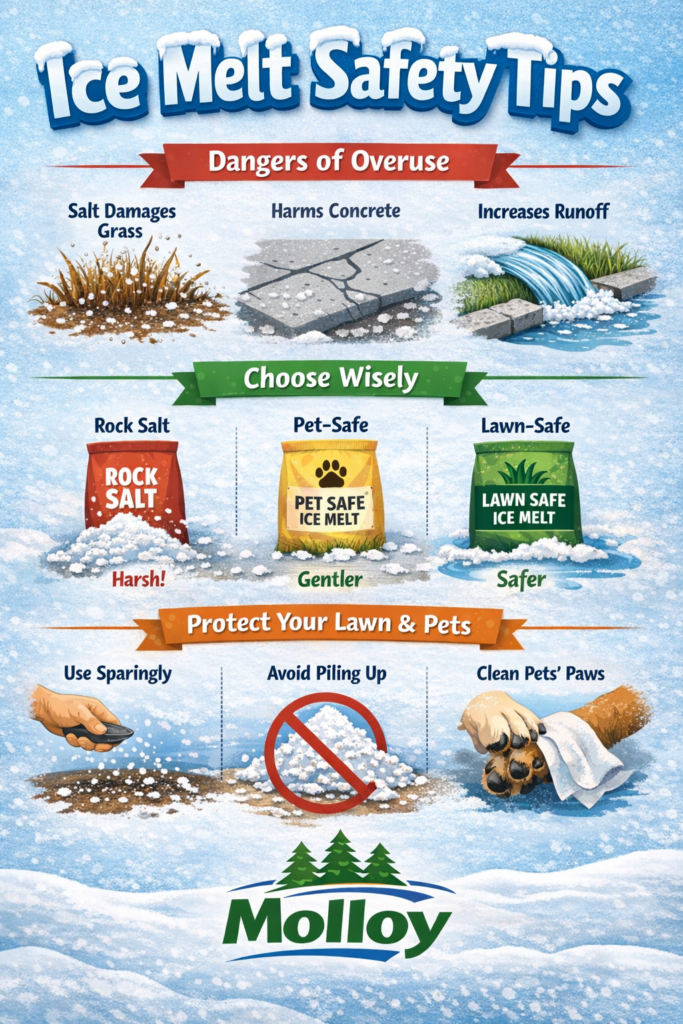
Rock Salt (Sodium Chloride)
The most common — and most damaging.
It’s inexpensive and easy to find, but harsh on grass, soil, concrete, and pets. Rock salt is one of the biggest contributors to winter lawn damage in Massachusetts.
Calcium Chloride
Works at lower temperatures and melts ice faster, but still aggressive if overused. It generates heat as it dissolves, which can shock turf and soil.
Magnesium Chloride
Often marketed as a safer alternative. It’s less damaging than rock salt but can still cause lawn stress when applied heavily or repeatedly.
“Lawn-Safe” or “Pet-Safe” Ice Melt
These products are gentler, but they’re not harmless. They still require careful application and proper timing to avoid buildup and runoff.
No matter the product, more is never better.
Why Overusing Ice Melt Causes More Harm Than Good
One of the biggest misconceptions is that adding more ice melt speeds things up. In reality, overapplication:
-
Increases runoff into lawns
-
Raises salt concentration in soil
-
Creates uneven melting and refreezing
-
Worsens long-term turf damage
Thin, even applications — combined with good snow removal — are far more effective than dumping piles of product in one spot.
Ice Melt and Pets: Another Reason to Be Careful
When asking “Is Ice Melt Safe for Lawns?” many homeowners are also thinking about pets.
Salt and chemical deicers can:
-
Irritate paws
-
Cause stomach issues if ingested
-
Dry out skin and pads
Products labeled as pet-safe reduce risk, but proper application and cleanup still matter. Rinsing paws after walks and avoiding overuse near lawns helps protect both pets and turf.
Ice Melt and Pavement Damage (The Overlooked Problem)
Ice melt doesn’t just affect lawns — it can shorten the life of concrete and pavers too.
Salt seeps into tiny cracks. When temperatures drop again, trapped moisture freezes and expands, leading to:
-
Surface scaling
-
Cracks
-
Premature deterioration
This is especially common in Massachusetts, where freeze-thaw cycles are frequent. Responsible ice management protects your lawn and your hardscapes.
How Professionals Use Ice Melt Differently
Professional snow and ice management takes a measured, strategic approach. Instead of reacting to slippery conditions with excessive product, professionals monitor weather patterns and apply ice melt only when necessary.
This approach:
-
Reduces overall chemical use
-
Protects lawns and soil
-
Improves safety without overapplication
-
Limits spring turf damage
Planning — not panic — is the difference.
Why Winter Ice Decisions Affect Spring Lawn Health
Many spring lawn problems start months earlier. Ice melt damage weakens turf just when grass should be waking up from dormancy.
Lawns stressed during winter often need:
-
Aeration to relieve compaction
-
Overseeding to repair thin areas
-
Targeted fertilization to restore balance
Preventing damage in winter is far easier than repairing it in spring.
So, Is Ice Melt Safe for Lawns?
The real answer is this: Ice melt can be safe for lawns when used responsibly — and damaging when it’s not.
Choosing the right product, applying it sparingly, and understanding how it moves through your landscape all make a difference. Smart winter ice management protects your lawn, your pets, and your property while still keeping surfaces safe.
Winter decisions matter more than most people realize. A little care now goes a long way once the snow melts.
Contact Us
Call: (617) 333-6900