

As winter finally loosens its grip on the Boston area, homeowners in Milton, Massachusetts begin looking forward to greener lawns, blooming gardens, and warmer days. But while spring brings new life to your landscape, it also brings a lot of rain.
Preparing your landscape for spring rain is one of the most important steps homeowners can take to protect their lawns, gardens, and property. In New England, spring storms can deliver significant rainfall in short periods of time. Without proper preparation, this excess water can lead to soil erosion, lawn damage, drainage issues, and even foundation concerns.
At Molloy Lawn & Landscape, we’ve spent years helping homeowners throughout the Boston area and Milton, MA prepare their landscapes for seasonal weather changes. Based on what we see every spring, proactive preparation can make the difference between a yard that thrives and one that struggles with soggy soil and patchy grass.
The good news is that a few smart steps can help ensure your landscape handles spring rain with ease.
Why Spring Rain Can Be Tough on New England Landscapes
Rain is essential for plant growth, but too much water — especially in a short period of time — can create problems for lawns and landscapes.
Spring storms in the Boston area often arrive when soils are already saturated from snowmelt. This is especially true after the harsh winter that we recently experienced.That means the ground has limited capacity to absorb additional moisture.
Here are some of the most common issues we see when homeowners haven’t prepared their landscapes for spring rain.
Soil Erosion
Heavy rainfall can wash away valuable topsoil. This not only exposes plant roots but also removes nutrients that plants need to grow.
You may notice:
- Exposed roots in garden beds
- Washed-out mulch areas
- Bare patches in your lawn
Over time, erosion can reshape planting beds and weaken the health of your landscape.
Waterlogged Soil
Plants need water, but they also need oxygen in the soil. When soil becomes overly saturated, oxygen levels drop, which can lead to root rot and unhealthy plants.
Signs of waterlogged soil include:
- Yellowing plants
- Mushy soil texture
- Slow plant growth
Drainage Problems
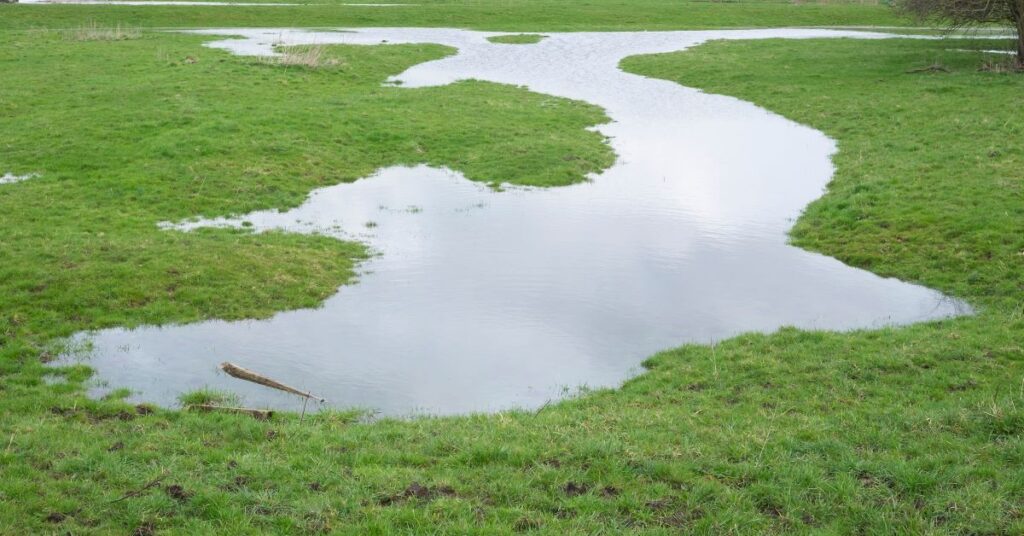
Poor drainage can lead to water pooling in certain parts of the yard. Standing water can damage grass and create muddy areas that remain soggy for weeks.
In Milton, we often see drainage problems in backyards with clay-heavy soil, which is common in parts of the Boston area.
Nutrient Leaching
Excessive rain can wash nutrients away from the soil before plants have a chance to absorb them.
This means lawns may emerge from winter looking thin or pale because essential nutrients were literally washed away during early spring storms.
Essential Steps for Preparing Your Landscape for Spring Rain
The key to protecting your property is to prepare before heavy rain arrives. Taking a few preventative steps can dramatically improve how your yard handles moisture.
Here are the strategies we recommend for Milton homeowners.
1. Start With a Spring Landscape Cleanup
Winter storms often leave behind debris such as branches, leaves, and organic buildup. This material can block water flow and trap moisture against plants.
A thorough spring cleanup should include:
- Removing fallen branches
- Clearing leftover leaves from garden beds
- Cleaning debris from lawn areas
- Removing winter sand or grit from walkways
This simple step improves drainage and airflow, helping your lawn dry more efficiently after rainfall.
2. Aerate Your Lawn for Better Drainage
One of the most effective ways of preparing your landscape for spring rain is lawn aeration.
Aeration involves creating small holes in the soil that allow water, nutrients, and oxygen to reach the root zone more effectively.
Benefits of aeration include:
- Improved water absorption
- Reduced soil compaction
- Stronger root growth
- Better resistance to standing water
Many lawns in the Boston area develop compacted soil due to foot traffic, snow piles, and winter freeze cycles. Aeration helps reverse this compaction and improves drainage significantly.

3. Improve Soil With Organic Matter
Soil health plays a huge role in how well your landscape handles heavy rain.
Adding compost or organic matter improves soil structure, allowing it to hold moisture without becoming waterlogged.
Organic soil amendments can:
- Improve drainage
- Increase nutrient retention
- Encourage beneficial soil microbes
- Support stronger plant growth
For homeowners in Milton, where clay soil is common, compost is especially helpful for loosening heavy soil and improving water movement.
4. Check Gutters and Downspouts
One of the most overlooked parts of preparing your landscape for spring rain is your home’s drainage system.
Clogged gutters and downspouts can cause water to overflow and pour directly into planting beds or lawn areas.
This can lead to:
- Soil erosion near your foundation
- Mulch washouts
- Basement moisture problems
Make sure to:
- Remove leaves and debris from gutters
- Confirm downspouts direct water away from the home
- Ensure drainage paths remain clear
Cleaning gutters twice a year — spring and fall — is one of the easiest ways to prevent water damage.
5. Apply Mulch to Protect Garden Beds
Mulch is more than just decorative — it plays a major role in protecting soil during heavy rain.
A fresh layer of mulch can:
- Reduce soil erosion
- Regulate soil moisture
- Suppress weeds
- Improve soil health over time
Mulch acts like a protective blanket for your garden beds, preventing heavy rain from washing away topsoil.
For best results, apply 2–3 inches of mulch around plants and shrubs.
6. Consider Drainage Improvements
If your yard regularly experiences standing water, additional drainage solutions may be necessary.
Some effective options include:
French Drains
A French drain uses underground piping and gravel to redirect water away from problem areas.
Dry Creek Beds
Decorative drainage channels that guide water safely through the landscape.
Downspout Extensions
Redirecting roof runoff further away from your home.
Many Milton homeowners benefit from drainage solutions because properties often sit on slow-draining soils that retain moisture longer after storms.

Plants That Thrive in Wet Conditions
If certain areas of your yard naturally stay wet, it can help to plant species that tolerate moist soil.
Some excellent options include:
- Red Twig Dogwood – Beautiful shrub with bright red winter stems
- Swamp Milkweed – Native pollinator plant that thrives in wet areas
- Sensitive Fern – Excellent choice for shady, moist locations
- Joe-Pye Weed – Tall flowering plant that attracts butterflies
Choosing the right plants can transform a problem area into a beautiful feature.
What We Often See in Milton Backyards
Working with homeowners throughout Milton and the greater Boston area, we often encounter similar spring landscape challenges.
One of the most common issues is water pooling in backyard lawns due to improper grading or compacted soil. This can create muddy conditions that damage grass and attract mosquitoes.
Another frequent problem is neglected gutters, which cause roof runoff to pour directly into garden beds.
Addressing these issues early in the season helps prevent larger landscape problems later in the year.
Why Local Knowledge Matters in New England Landscaping
Preparing your landscape for spring rain in Milton, Massachusetts requires an understanding of the region’s climate and soil conditions.
New England landscapes face unique challenges including:
- Freeze-thaw soil cycles
- Clay-heavy soil composition
- Rapid spring snowmelt
- Intense seasonal rainfall
A landscape strategy that works in other regions may not perform well in the Boston area.
Local expertise helps ensure your landscape is prepared for the specific weather patterns and soil types common to Milton and surrounding communities.
Get Your Landscape Ready for Spring Rain
Spring rain doesn’t have to mean soggy lawns or washed-out garden beds.
With the right preparation, your yard can handle seasonal storms while staying healthy and beautiful.
If you’re preparing your landscape for spring rain in Milton, Massachusetts or the greater Boston area, the team at Molloy Lawn & Landscape can help.
From drainage improvements and lawn aeration to full spring landscape preparation, we help homeowners protect and improve their outdoor spaces.
Contact Molloy Lawn & Landscape today for a consultation and start the season with a landscape that’s ready for whatever New England weather brings.
FAQ: Spring Landscape Questions from Milton Homeowners
When should I aerate my lawn in Milton, MA?
Early spring — typically March or April — is the best time. Aerating after the ground thaws improves drainage before heavy spring rains arrive.
How much does a French drain cost in Milton?
Costs typically range between $10 and $30 per linear foot, depending on the size of the project and soil conditions.
Do I need to amend my soil every year?
While not always necessary, adding compost annually is beneficial, especially for clay soils common in the Boston area.
Why do my gutters affect my landscape?
Overflowing gutters can dump large amounts of water directly into garden beds and lawns, causing erosion and drainage issues.
Spring Tip for Milton Homeowners: Clean Those Gutters
As spring approaches, one of the easiest ways to protect your home and landscape is to clean your gutters.
Clogged gutters can cause water to overflow, leading to damage to your roof, siding, and foundation — not to mention your lawn and garden beds.
It’s a simple task that can prevent expensive repairs later.
Need help preparing your landscape for spring rain?