
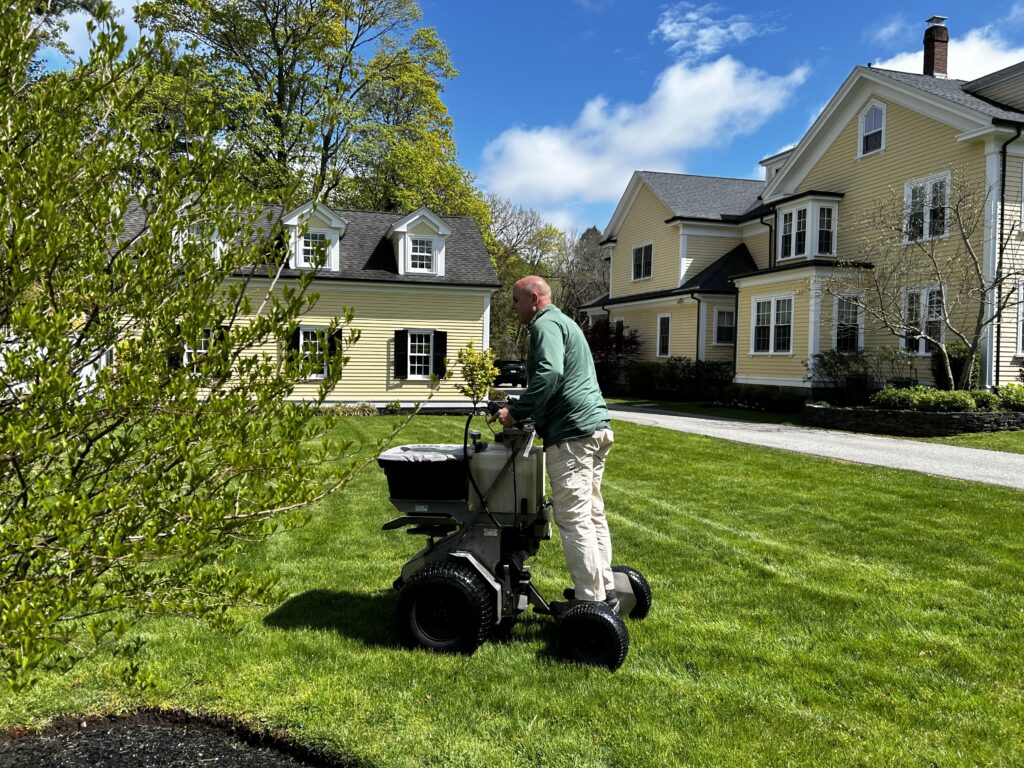
Boston Area Spring Lawn Prep: What Milton Homeowners Should Do Right After Snow Melt
Every year across the Boston area, the same moment signals the start of lawn season: the day the snow finally melts away. For homeowners in Milton, Quincy, Canton, and nearby South Shore communities, that melting snow reveals what winter left behind — flattened grass, leftover sand from plows, soggy soil, and sometimes bare patches along driveways or sidewalks.
But here’s the part many homeowners don’t realize.
Boston area spring lawn prep actually begins the moment the snow disappears — not when grass starts turning green.
Waiting too long to assess your lawn can allow early problems like compaction, fungal disease, or salt damage to worsen. On the other hand, starting too aggressively before the lawn is ready can damage turf that’s still recovering from winter stress.
In our experience working with homeowners throughout Milton and the surrounding Boston suburbs, the best results come from taking a thoughtful, step-by-step approach immediately after snow melt.
This guide walks through exactly what to look for and how to help your lawn recover properly so it greens up faster and grows thicker throughout the season.
Why Early Boston Area Spring Lawn Prep Matters
Winter places a surprising amount of stress on turfgrass in Massachusetts. Snow cover, freezing temperatures, road salt, and heavy snow piles can all impact soil health and grass roots.
Once snow melts, lawns often face several common challenges:
-
Flattened or matted turf
-
Compacted soil
-
Salt exposure near sidewalks and driveways
-
Winter debris from storms
-
Excess moisture trapped in the soil
Because many homes in Milton sit on dense New England soil that retains moisture, these problems can linger longer than homeowners expect.
Early Boston area spring lawn prep helps correct these issues before they slow down growth or cause thin, patchy lawns later in the season.
Step 1: Start With a Post-Snow Lawn Inspection
Before raking, seeding, or applying any treatments, the first step should always be a full property walk-through.
Taking a few minutes to evaluate your lawn allows you to identify areas that need attention and avoid damaging fragile turf.
Things to look for
-
Snow mold patches or discolored grass
-
Salt damage near sidewalks or driveways
-
Areas where snow piles sat all winter
-
Branches or debris from winter storms
-
Standing water or drainage problems
Why this matters locally
Milton neighborhoods near Blue Hills Reservation or other wooded areas often retain snow longer due to shade. These lawns tend to stay wet longer, which increases the risk of fungal turf diseases.
One of the most common mistakes we see homeowners make during Boston area spring lawn prep is raking aggressively without inspecting first. If grass crowns are still weak from winter, rough raking can tear them out and slow recovery.
A careful inspection helps you avoid unnecessary damage.
Step 2: Remove Winter Debris and Lift Matted Grass
Once the lawn surface firms up and isn’t overly wet, light cleanup is the next step.
During winter, snow pressure can push grass blades flat against the soil. When left untouched, this matted turf traps moisture and blocks sunlight, which delays green-up.
Best cleanup practices
-
Use a light leaf rake to gently lift matted grass
-
Remove branches and winter debris
-
Clear sand and gravel left behind by plowing
-
Redistribute displaced mulch in garden beds
Across the Boston area, sand from winter traction is one of the most overlooked debris sources. Left in place, it can damage mower blades later in the season and create bare patches in the lawn.
Light raking allows grass blades to stand upright again while improving airflow and sunlight exposure.
Step 3: Be Patient With Wet Soil
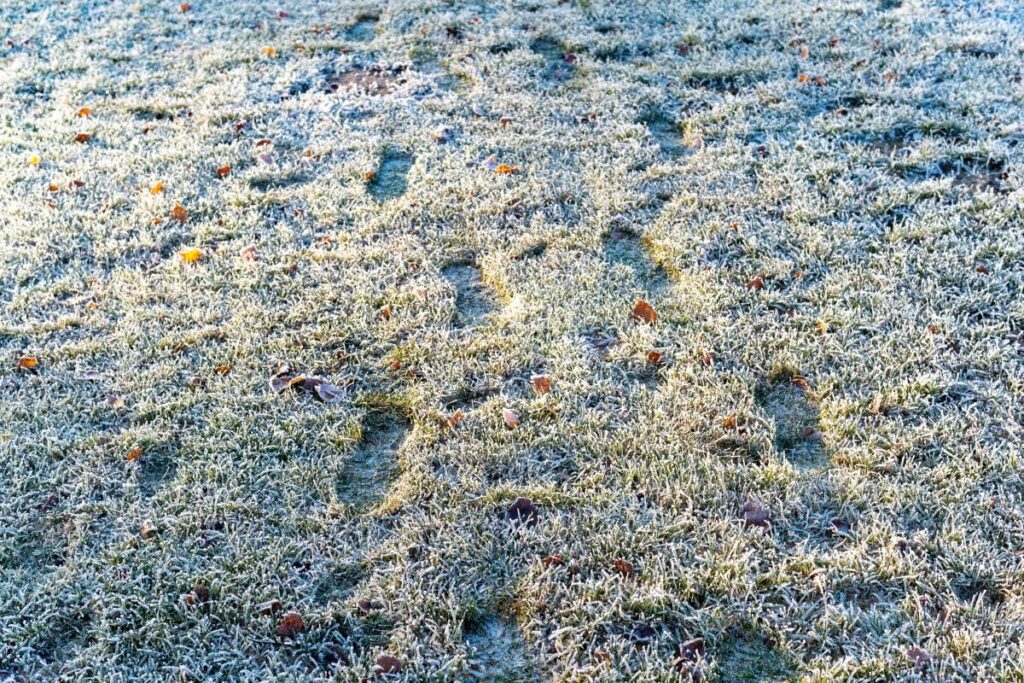
One of the most important parts of successful Boston area spring lawn prep is knowing when not to work on the lawn.
Early spring soil often remains saturated from melting snow and seasonal rainfall.
Signs your lawn is still too wet
-
Footprints remain visible after walking
-
Soil sticks heavily to shoes
-
Water pools when stepped on
-
Grass feels spongy underfoot
Milton, Randolph, and Holbrook lawns often contain clay-influenced soil, which holds water longer than sandy soils.
Working on the lawn too soon can cause compaction, which restricts oxygen flow to grass roots and slows growth.
Instead, homeowners should:
-
Limit foot traffic
-
Redirect downspouts away from lawn areas
-
Allow natural drying before major lawn work
Patience during this stage can prevent bigger problems later.
Step 4: Repair Areas Where Snow Was Piled
Every property has at least one area where snow piles accumulate during winter — usually near driveways or along the street.
These zones often show the most winter damage.
Common issues in snow storage areas
-
Compacted soil
-
Salt buildup
-
Delayed grass growth
-
Reduced oxygen to roots
Across properties we’ve serviced in Braintree, Avon, and Milton, snow pile areas are almost always the last spots to green up in spring.
Recovery strategies
-
Lightly rake the area once dry
-
Plan for spring aeration
-
Overseed thin patches
Aeration is especially helpful in these locations because it breaks up compacted soil and improves drainage.
Step 5: Flush Salt-Affected Lawn Edges
Salt damage is one of the most visible lawn problems after winter in Massachusetts.
Grass near sidewalks, driveways, and roadways often receives concentrated salt runoff during snow melt.
Signs of salt damage
-
Yellow or brown grass along pavement edges
-
Thin turf in narrow lawn strips
-
Delayed green-up compared to surrounding areas
What homeowners can do
-
Water affected areas during mild weather
-
Apply gypsum if salt buildup is severe
-
Overseed damaged spots in spring
In many Milton neighborhoods, these sidewalk edges are the first lawn areas that require repair each season.
Step 6: Plan Early Overseeding for Thin Areas
Overseeding is one of the best ways to restore lawn density after winter damage.
However, timing is critical.
Because Boston spring weather fluctuates, seeding too early exposes grass seed to cold soil, heavy rain, or washout.
Best overseeding practices
-
Wait for consistent soil warming
-
Use region-appropriate seed blends
-
Keep seeded areas lightly moist during establishment
Shaded Milton backyards often benefit from shade-tolerant fescue blends, while sunny lawns typically perform better with durable cool-season turf varieties.
Targeted overseeding can quickly improve the appearance of bare or thin areas.
Step 7: Schedule Fertilization at the Right Time
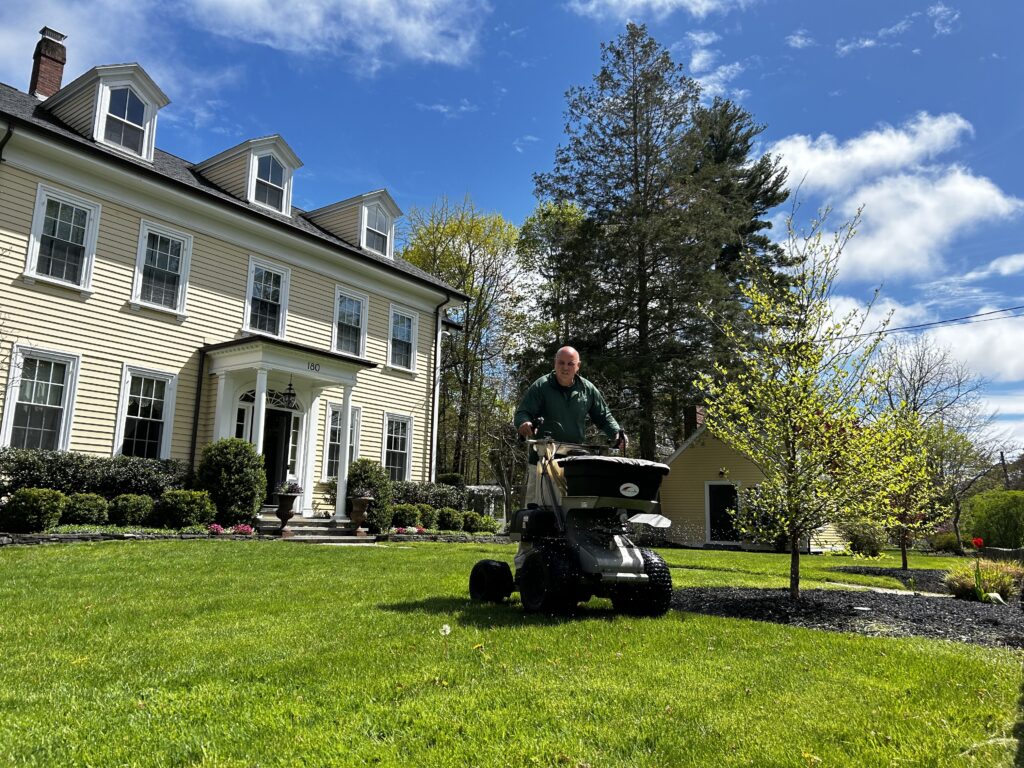
Fertilization plays an important role in helping lawns recover after winter stress.
However, applying fertilizer too early during Boston area spring lawn prep can reduce its effectiveness.
If grass isn’t actively growing yet, nutrients may wash away during spring rains instead of feeding the lawn.
Goals of early spring fertilization
-
Encourage root recovery
-
Promote uniform green color
-
Support thicker turf development
Because Milton is close to the coast, lawns here often warm up slightly slower than inland Massachusetts communities.
Waiting for the right growth stage ensures fertilizer provides maximum benefit.
What We Notice Every Spring in Milton Lawns
While every property is unique, several patterns appear year after year across Milton and nearby Boston suburbs:
-
Shaded yards hold moisture longer
-
Driveway snow storage zones grow back slower
-
Salt exposure varies by street depending on plowing patterns
-
Older neighborhoods often have more compacted soil
These small local factors can make a big difference in how lawns recover each spring.
That’s why many homeowners choose professional lawn maintenance services that evaluate properties individually and recommend the right sequence of treatments.