
Winter Storms Leave More Than Snow Behind
Winter storms in Milton and the surrounding Boston Area leave more behind than snowbanks and icy driveways. In our experience servicing properties from East Milton to Brush Hill Road, we consistently see the same pattern: compacted turf under snow piles, salt burn along sidewalks, and plow damage where blades edged just a little too close.
Many properties in Milton, Quincy, Braintree, and Canton sit on clay-heavy soil that holds moisture well into early spring. That means storm recovery isn’t just cosmetic — it directly affects lawn performance for the entire growing season.
Understanding what Boston Area lawns need after a winter storm can prevent months of thinning turf, drainage issues, and patchy growth. For broader winter storm safety tips for Massachusetts homeowners, Mass.gov provides official guidance on preparing properties before and after severe weather.
Let’s walk through the most important recovery steps.

1. Inspect for Snow Mold and Winter Turf Disease
One of the most common issues affecting Boston Area lawns after a winter storm is snow mold.
What Snow Mold Looks Like:
- Circular gray or pink patches
- Matted, straw-like grass
- Areas that stay wet longer after snow melt
Why It Happens in Milton, MA
Boston winters frequently bring freeze–thaw cycles. Snow often falls on partially unfrozen ground — something we regularly observe throughout the Boston Area in Milton Massachusetts. When snow sits on moist turf, oxygen becomes limited and fungal pathogens thrive.
Shaded backyards bordered by fences or wooded property lines — common in Milton neighborhoods — tend to trap snow longer, delaying recovery compared to open front lawns.
What To Do
- Lightly rake affected areas to improve airflow
- Avoid aggressive dethatching while soil is saturated
- Allow natural sunlight exposure as temperatures rise
In most cases, snow mold improves naturally as temperatures stabilize. However, early inspection is critical to prevent further turf decline.
2. Check for Salt Damage Along Sidewalks and Driveways
Salt injury is often the earliest visible issue affecting Boston Area lawns after a winter storm.
Common Signs of Salt Damage:
- Browning grass strips
- Patchy turf along curbs
- Soil structure breakdown
- Delayed spring green-up
Why It’s Worse in Milton
Many Milton neighborhoods feature narrow planting strips between sidewalks and lawns. These strips collect concentrated salt runoff from both municipal plowing and homeowner deicing.
Sodium accumulation disrupts soil structure, reduces water infiltration, and damages root systems.
Recovery Steps
- Flush affected areas with water during milder days
- Apply gypsum to help displace sodium ions
- Plan to overseed damaged strips in spring
One common mistake we see: homeowners waiting until late spring to address salt damage. By then, compaction and sodium buildup can limit successful germination.
Early intervention keeps repair simple and affordable.
3. Remove Storm Debris and Plow Residue
Heavy winter storms often push debris into lawns — branches, gravel, sand, and displaced mulch.
What We Frequently See
During post-storm cleanups in Hyde Park, Randolph, and Braintree, we regularly find:
- Plow gravel embedded in turf
- Sand buildup near driveway edges
- Mulch washed into grass
- Hidden branches under melting snow
Left unattended, debris can dull mower blades and create thin grass areas once mowing season begins.
Recommended Approach
- Walk the property once snow recedes
- Hand-remove branches and debris
- Lightly rake gravel from turf
- Redistribute displaced mulch
This simple step protects both turf health and mowing equipment longevity.
4. Address Soil Compaction from Snow Piles
Snow storage is unavoidable in New England — but it comes with consequences.
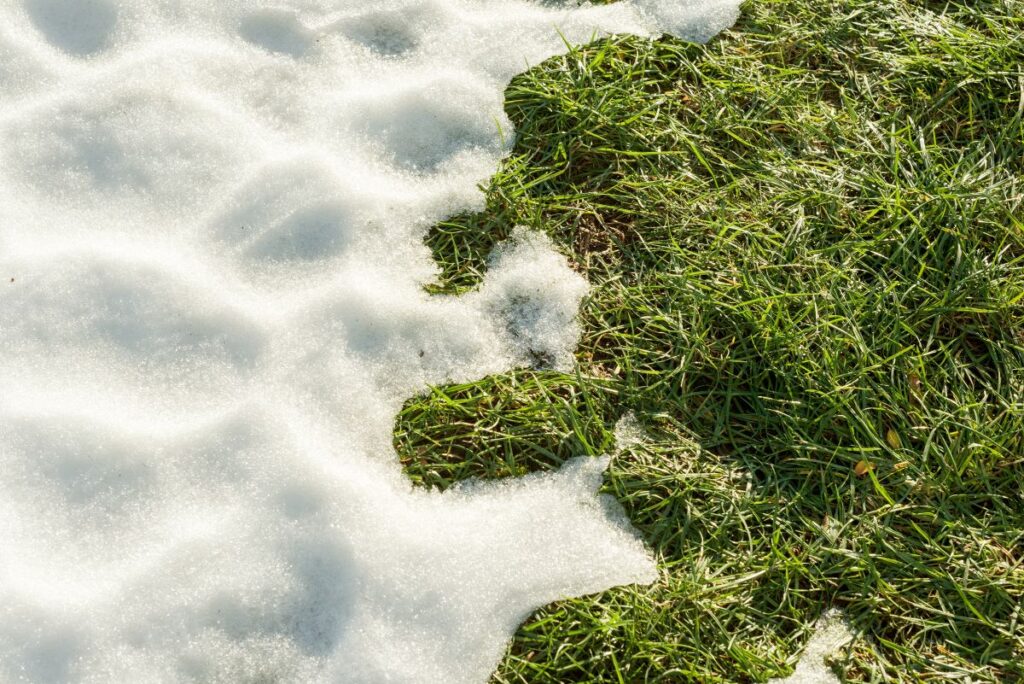
When heavy snow piles sit on lawns for weeks, underlying soil compresses. This limits oxygen exchange and root growth.
Why Compaction Is Worse in the Boston Area
The clay-loam soils common throughout Milton, Canton, and Holbrook already have moderate density. Add prolonged snow weight plus foot traffic, and soil structure tightens significantly.
Signs of Compaction
- Water pooling after snow melt
- Slow green-up in spring
- Thin grass in snow pile locations
- Hard soil that resists probing
The Best Solution: Core Aeration
Many homeowners assume raking will fix the issue — but compaction occurs below the surface.
Core aeration removes plugs of soil, restoring airflow and water movement in the root zone. In our field experience across the Boston Area, lawns that receive spring aeration after heavy winters recover faster and grow thicker.
It’s one of the most effective steps for restoring Boston Area lawns after a winter storm.
5. Repair Plow and Ice Damage to Lawn Edges
Mechanical turf damage is another common post-storm issue.
Local Pattern We See
Older Milton neighborhoods often feature tight driveways. When plow blades push snow repeatedly through the season, turf edges along driveway aprons get scalped or torn.
How to Repair
- Cut out damaged turf sections
- Add fresh topsoil
- Overseed when temperatures stabilize
Driveway edges in Braintree and Avon are consistently among the first areas to require reseeding each spring due to plow contact.
Addressing these sections early helps blend repairs before peak growing season.
6. Manage Excess Moisture from Snow Melt
Rapid thaw events can saturate lawns, especially in lower-lying properties.
Why It’s Common in Milton
Homes near the Neponset River and other low-grade areas experience slower drainage during melt cycles. Clay soils compound the problem by retaining moisture longer.
Prevention Tips
- Avoid walking on wet turf
- Keep downspouts directed away from lawn surfaces
- Monitor pooling areas for drainage improvements
Walking across saturated lawns is a subtle but frequent cause of spring thinning. We observe it every year during early-season service visits.
Patience during drying periods can prevent weeks of turf setback.
Why Local Experience Matters
Recovering Boston Area lawns after a winter storm isn’t one-size-fits-all.
Success depends on understanding:
- Freeze–thaw timing specific to eastern Massachusetts
- Salt exposure patterns from municipal snow management
- Local soil composition
- Property layouts common to Milton neighborhoods
Generic lawn advice often recommends fertilizing or dethatching too early. Doing so while turf is stressed can worsen damage.
At Molloy Lawn & Landscape, our team works under professional standards, maintains full insurance coverage, and follows region-specific best practices for turf recovery.
Local knowledge allows us to make decisions based on real Milton conditions — not generalized seasonal calendars.
Supporting Lawn Recovery with Complementary Services
Post-storm lawn care often overlaps with other seasonal needs. Coordinating services helps prevent repeated damage cycles year after year.
Homeowners frequently combine recovery work with:
- Spring cleanup services
- Adjustments to snow management planning
- Fertilization programs designed for early turf regeneration
- Aeration and overseeding packages
Strategic planning ensures Boston Area lawns after a winter storm rebound stronger rather than struggling through the growing season.
Final Thoughts for Milton Homeowners
Winter storms are inevitable in Milton, MA — but long-term lawn damage doesn’t have to be.
By:
- Inspecting for snow mold
- Addressing salt exposure
- Removing debris
- Relieving soil compaction
- Managing excess moisture
Homeowners can dramatically improve spring recovery outcomes.
In our day-to-day work across Milton and surrounding Boston Area communities, we consistently see that early attention leads to:
- Thicker turf
- Fewer bare patches
- Improved drainage
- Better overall lawn performance
If you’d like guidance tailored to your property or want help implementing these recovery steps, the Molloy Lawn & Landscape team is available to discuss options, answer questions, or schedule service throughout Milton and nearby service areas.
FAQs — Winter Lawn Care for Milton, MA Homeowners
When is the best time to start spring lawn cleanup after winter storms in Milton, MA?
The best time is when snow has fully melted and the lawn surface is no longer soggy — typically late March to early April, depending on storm patterns. Because many local properties have clay-influenced soil and shaded tree cover, drying can take longer than expected.
Starting cleanup too early can cause compaction and turf damage.
How much does it cost to repair winter lawn damage in Milton, MA?
Costs vary based on damage severity. Minor repairs like overseeding and soil amendment are typically manageable. Properties with heavy snow pile storage or salt exposure may require more extensive work.
Early intervention helps keep repair costs lower and prevents larger turf replacement later.
Is spring aeration necessary after a harsh Boston winter?
For many Milton lawns, yes. Snow weight and foot traffic often cause compaction. Aeration improves drainage, root growth, and overall turf density — especially in dense New England soils.
Not every lawn needs it annually, but after heavier winters, it is often one of the most beneficial recovery services.
If your Boston Area lawn experienced heavy snow, salt exposure, or visible turf thinning this winter, early action can make all the difference.
Call Molloy Lawn & Landscape for expert landscape maintenance to schedule an inspection or discuss a spring recovery plan tailored specifically to your Milton property.